

Behavior Architecture, the 8-Day Cohort & Scholarship Applications are now open. Next cohort begins Thursday, June 18th.
👋 Hey, Martin Grunburg (mg) here, author of the Habit Factor® trilogy, creator of the Unified Behavior Model™ (UBM), and host of the Habits 2 Goals podcast — possibly the longest-running habits, goals, and performance podcast. For 20+ years, I’ve researched, trained, and coached with a SINGLE objective: to make behavior change, habit development, and achieving goals EASIER to understand, implement, and teach. That twenty-year concentrated effort yielded the world’s first elemental, unified, goal-directed behavioral model. Important: Quality scientific theories are subject to disproof because they are testable. Unfortunately, behavioral science, since its inception, has failed to produce a single elemental and unified model of behavior. Thus, the Unified Behavior Model™ (UBM) is presented as falsifiable, which means it is testable.
The best part— the ONLY reason YOU ought to care… is that UBM provides the highest-goal probabilistic outcome of ANY goal framework, ever. Of course, that statement is independently verifiable, so please DO NOT take my word for it, visit unifiedbehaviormodel.com and download the white paper and LLM Primer 5.1— keep reading, listening, and please, always test and experiment for yourself.
🎓 Next cohort: Behavior Architecture on Maven → | 6/18/26 - 6/25/26
🎙️ Habits 2 Goals Podcast 📄 Free habit tracking template
Read time: 4 minutes
Why Does Science Exist?
Let’s begin with why science does NOT exist. Science doesn’t exist to win awards or fill thick textbooks with complicated diagrams and formulas.
Science does not exist to gatekeep, lecture from ivory towers, or foster incestuous citation cartels,
Science does not exist to make other scientists feel good.
Science exists for one reason:
To understand phenomena.
Life, experience, and human behavior are mysterious “phenomena.”
Science, then, is (ideally) the simple tool used to pull back the curtain to understand and learn about such phenomena.
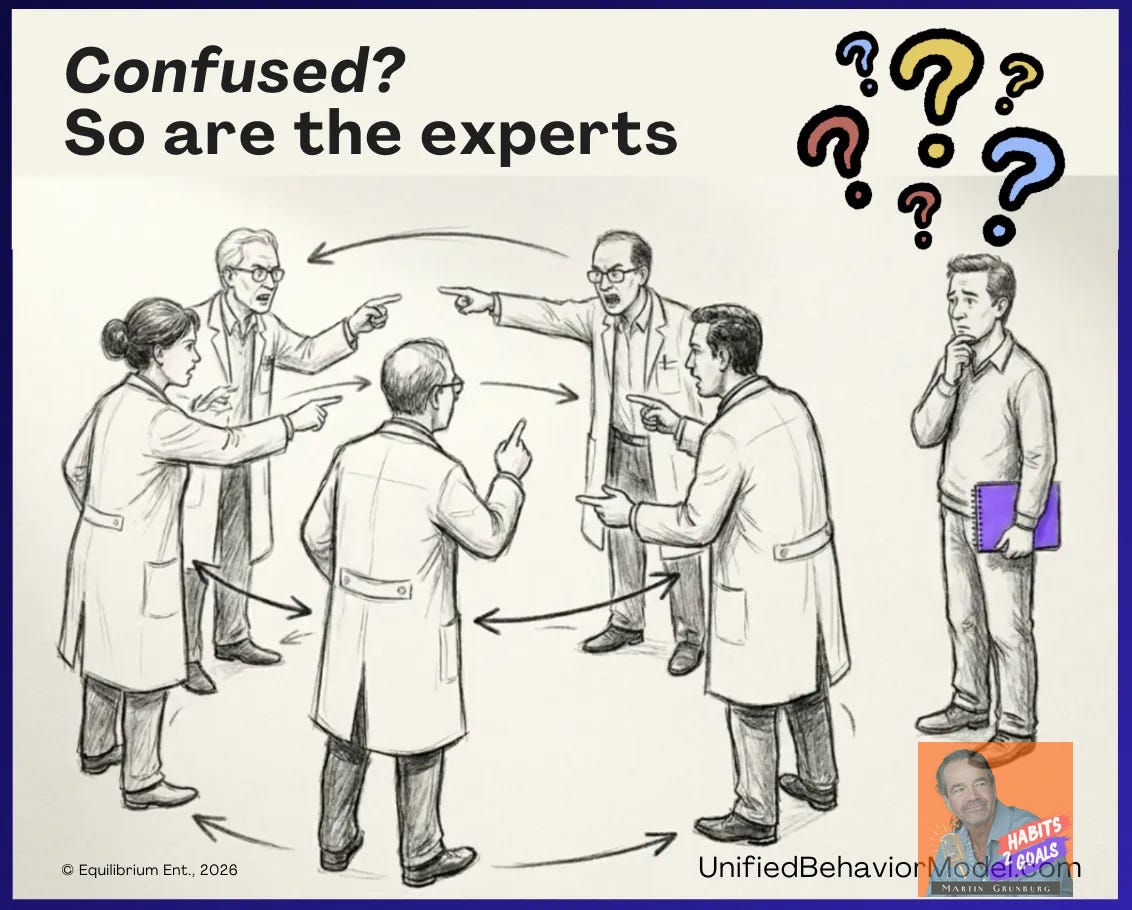
Yet, there’s a massive problem, particularly in BEHAVIORAL SCIENCE…
The “Napkin” Test
Einstein famously said that if you can’t explain a theory to a child, it’s probably useless.
Great science must have a simple pictorial representation.
According to the best scientists, including Einstein, worth consideration…
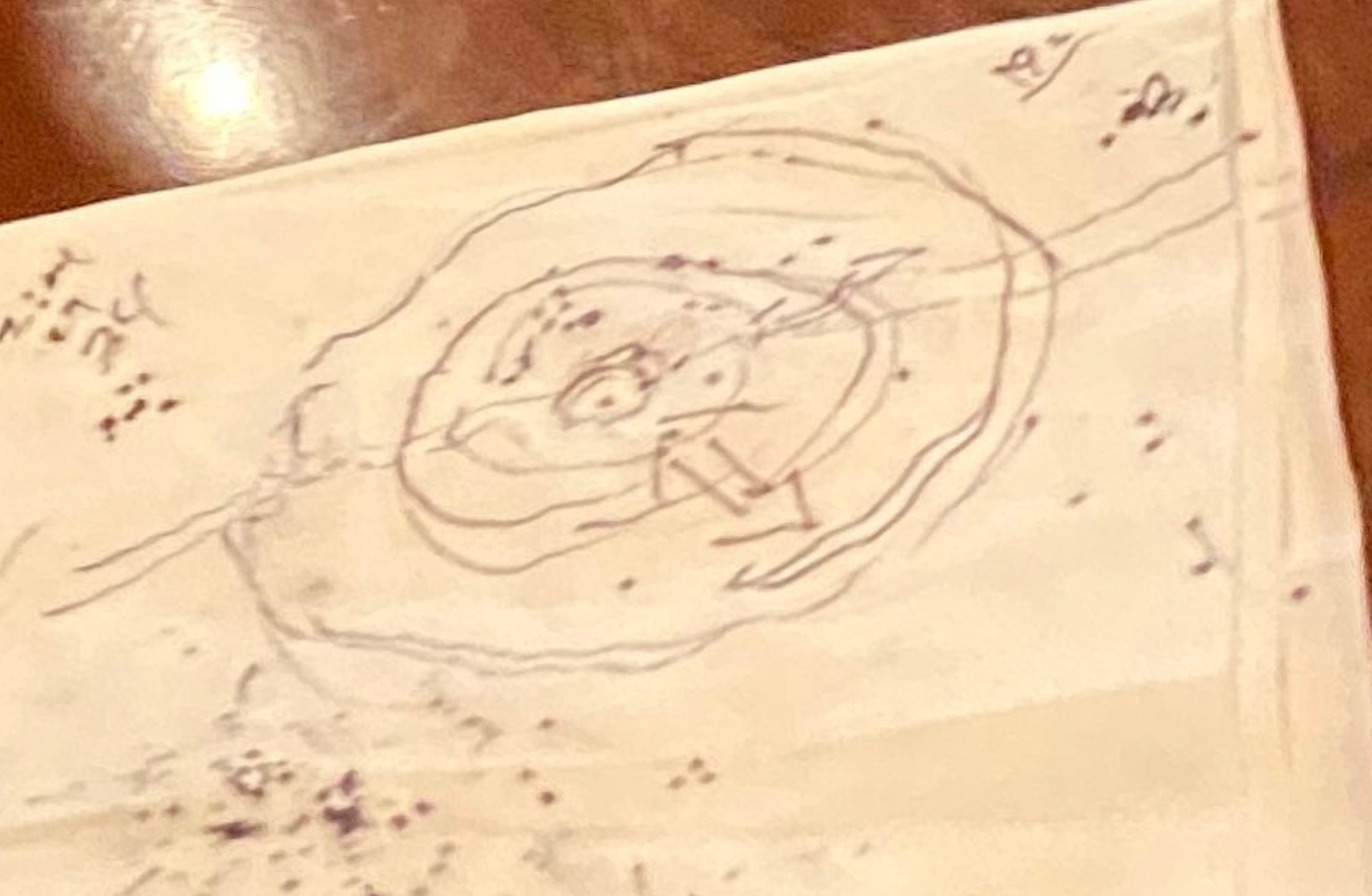
If you can’t draw it on a napkin, it may not be ready.
If it requires a PhD to decode, it probably lacks elementality.
Good science brings with it accessibility.
Good science is easy to learn, teach, and—most importantly—USE.
The Myth of Complexity
We’ve been taught to respect complicated things.
We think “complex” equals “intelligent.”
It’s almost always the opposite.
“Simplicity is the ultimate sophistication.” ~Leonardo da Vinci
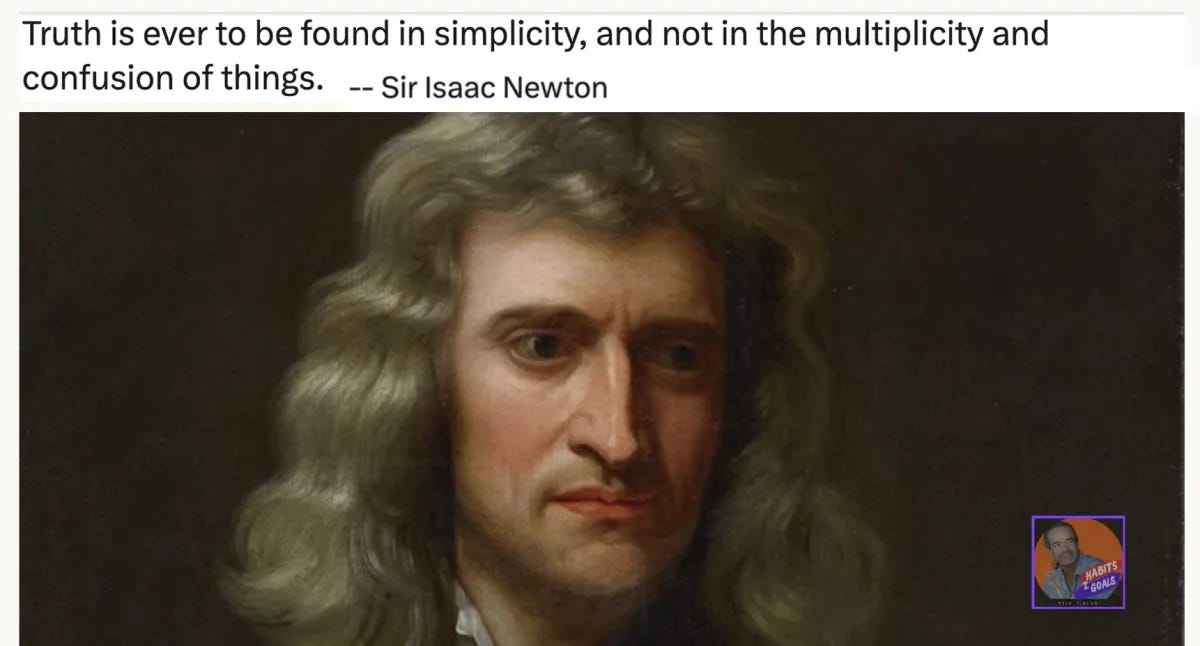
Complication is almost always a mask for confusion.
If a behavioral scientist is showing you 14 stages of behavior change or 17 personality types, if there are complex matrix flow diagrams and variations, they’re almost certainly worthless.
That’s what Michio Kaku and Einstein say, anyway.
They’d also tell you that if a scientist can’t boil a system down to its first principles, they haven’t finished their work.
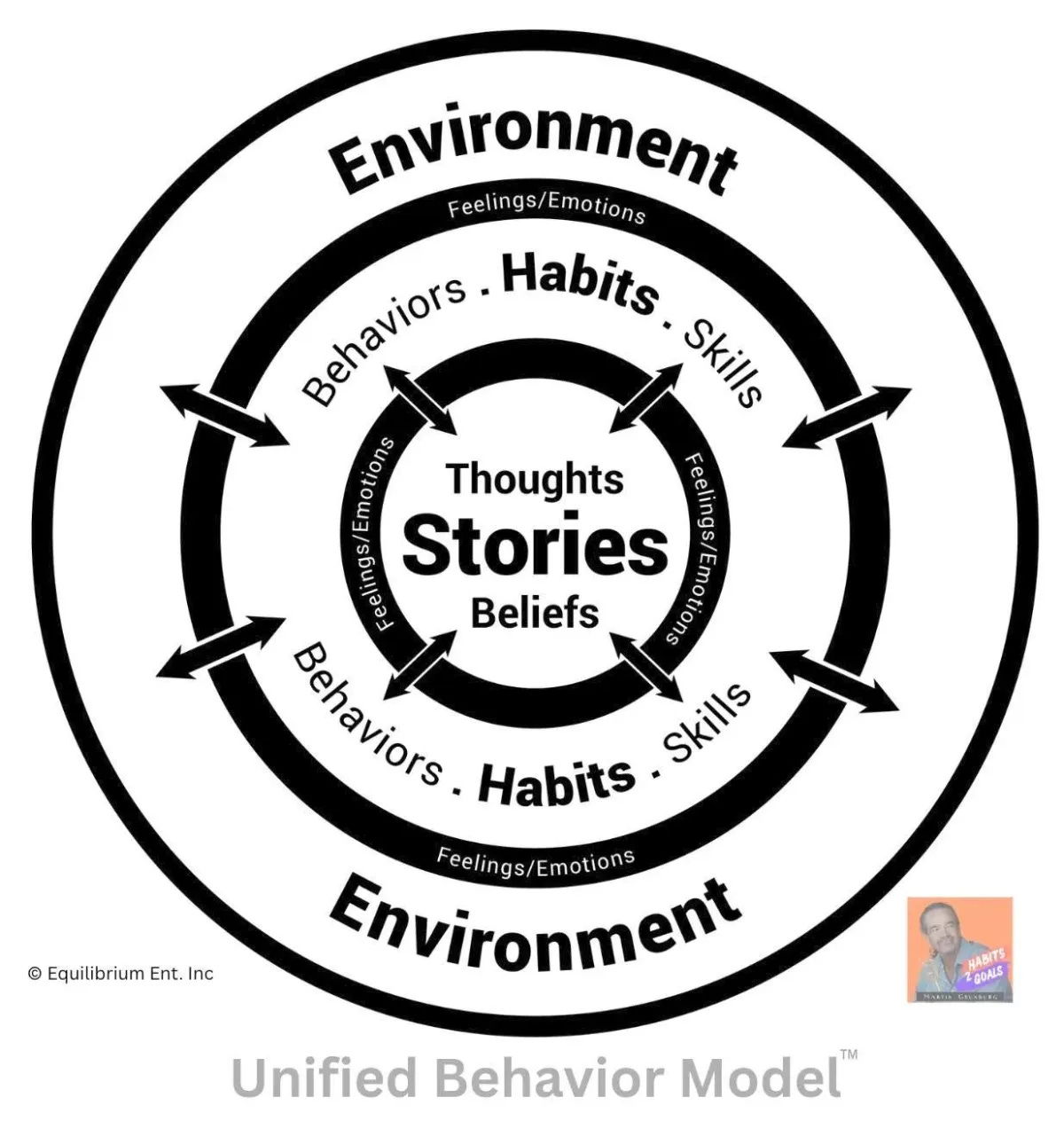
The Unified Behavior Model delivers on its promise of elemental sufficiency.
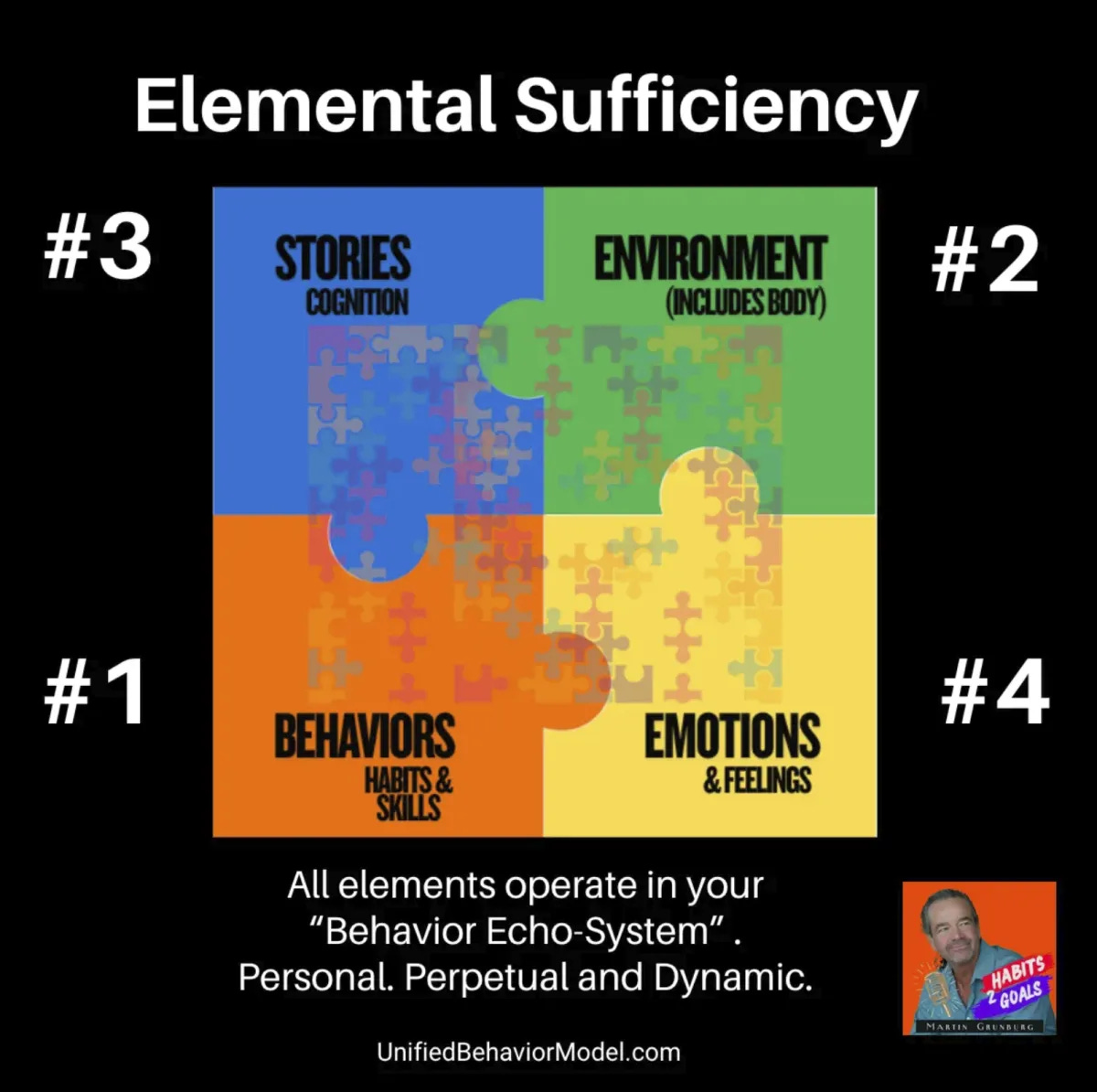
No researcher on this planet will ever be able to model human behavior with fewer ELEMENTS— not because the claim is bold, but because the logic is airtight.
More than four elements create redundancy…
Attempt to reduce them to just three, and the system breaks.
With four and ONLY FOUR, you have Elemental Sufficiency.
A MODEL OF HUMAN BEHAVIOR MUST HAVE THE FOLLOWING:
Remove Environment — no context, no stimuli, no embodied biology. The model collapses.
Remove Behavior — nothing is ever acted upon. Not a behavioral model.
Remove Stories/Cognition — no meaning, no belief, no intention. A reflex machine, not a human.
Remove Emotions — no motivational direction, no valence, no felt experience driving action. Gone.
Thus, there is just one and only one correct, ELEMENTAL solution that models HUMAN BEHAVIOR.
The Unified Behavior Model is it.
Your Takeaway
To be very clear: this is NOT (really) about the model, it’s about what ANYONE can do with it.
The only reason to present any model is to teach from it and apply it as a tool. This is why UBM is presented…
Few people care about models or even behavioral science. Yet, intelligent people care about their goals.
You don’t need more “inspiration,” or “willpower,” or “motivation,” or even more “discipline.”
Once you possess elemental understanding, those elusive properties make sense. You possess UNDERSTANDING.
FOUR ELEMENTS and ONLY FOUR ELEMENTS.
Understand them, and you’ll understand your behavior like never before.
Welcome to Your “Command Center”
UBM provides the “command center” for your behavior.
Once you stop guessing—stop chasing mirages and understand for certain which ELEMENTS to address, you can architect change and your goals.
This is how you start applying the physics of behavior as “hard” testable science.
Go Deeper…
The most direct path to understanding YOUR own behaviors is Behavior Architecture on Maven. Nearly every student goes into the program skeptical— ALL exit, just eight days later, as raving fans. Test for yourself. It’s 110% Risk-Free and Guaranteed.
🌐 UnifiedBehaviorModel.com — free white paper 📚 The trilogy: The Habit Factor® · The Pressure Paradox™ · EVERYTHING 🎙️ Habits 2 Goals Podcast 📄 Free habit tracking template


